As I approach Bloomberg’s London offices for an interview with violinist Roman Simovic, leader of the London Symphony Orchestra and a professor at the Royal Academy of Music, I feel a slight nervous anticipation.
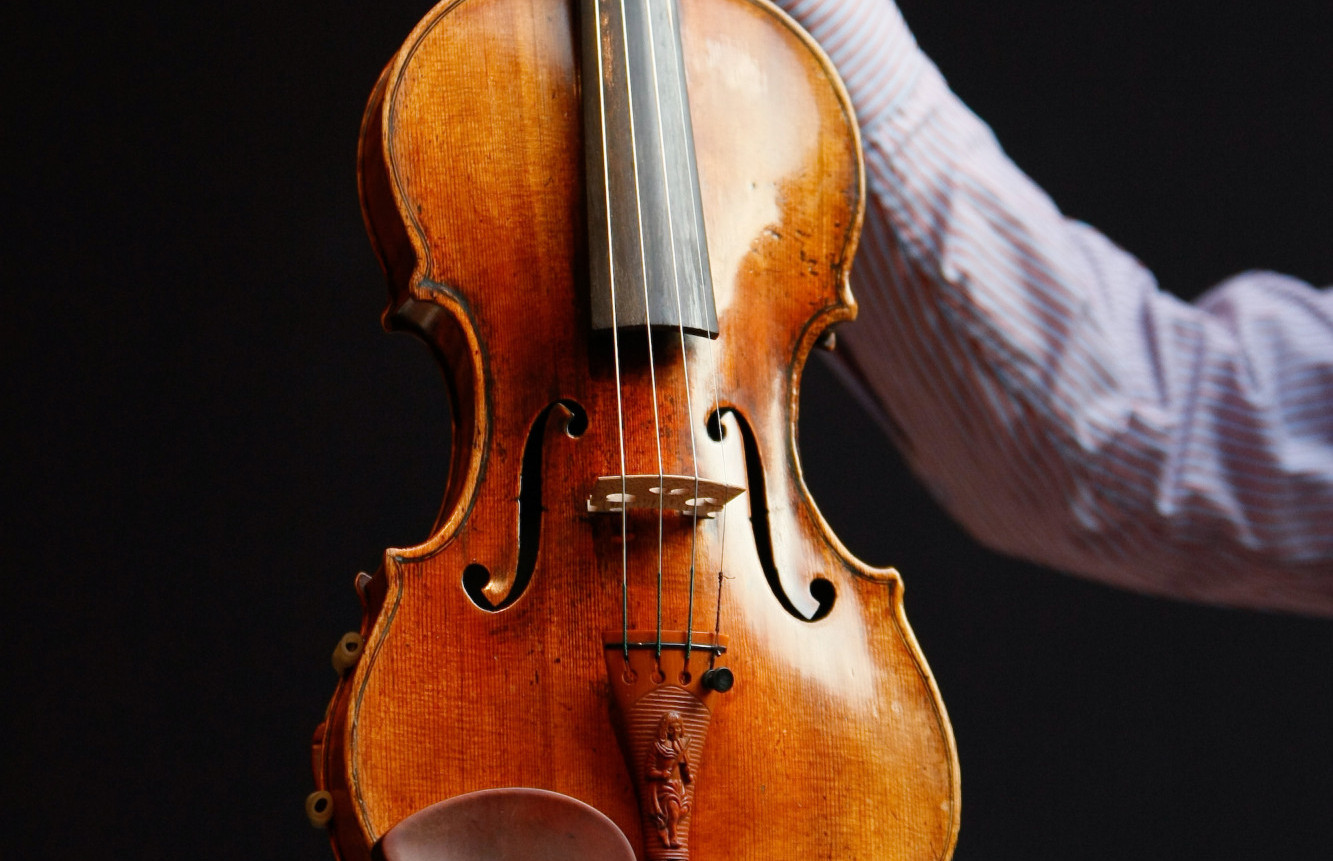
ot because of the conversation itself, but because he is bringing his violin. This isn’t just any violin - it’s a 1709 Stradivarius, loaned to him more than a decade ago by its owner, British banker and former Bank of America CEO Jonathan Mould. At the time the instrument was valued at $6 million.
Today, Simovic tells me, it is worth at least four times that. He smiles warmly, reassuring me there’s no need to worry - the insurance is covered by its proud owner. Still, I hurry inside, keen to understand why instruments like this are now being treated as serious investments, on par with traditional asset classes.
On our way to the studio, he tells me that these investments are appreciating at around ten percent per year. I can’t help but wonder: what insider edge do these investors have?
To find out that, I also spoke with Tim Ingles, co-founder of London-based Ingles & Hayday, Sotheby’s leading consultant for musical instruments department.
His firm specializes in auctions, authentication, and private sales. Ingles confirms a clear uptick in interest over the last decade.
“This trend is mostly driven by the fact that as these instruments become more expensive, the musicians who play them can no longer afford to buy them outright. They need financial backers, whether that’s a private sponsor, an investment syndicate, a foundation, or a financial institution,” Ingles explains. “And typically these patrons are motivated not only by the philanthropic aspect—helping a talented musician - but also by the investment potential.”
When I ask Simovic whether performing on such a valuable instrument limits artistic freedom, he shakes his head. “When you play this violin, it’s as if it has an inner world. The sound is different. Wood that has been vibrating for 300 years cannot be compared with even the best modern violins, even if they’re made from century-old wood.”
Preservation is crucial, Ingles notes - a small crack over the sound post in the back of an instrument can reduce its value by 50%. Provenance and playability are also important, but are unlikely to affect the value more than 20-30%. “Unless you are talking about Mozart’s violin, of course…”
Which violins carry the highest value and potential?
Stradivari’s works, famed for their depth and warmth, top the list. Simovic’s instrument comes from Stradivari’s golden period. Records suggest Antonio Stradivari’s workshop produced around 900 violins between the late 17th and early 18th centuries. Over a third have been lost, and another third are housed in museums, leaving roughly 300 in private hands. Jonathan Mould alone owns 15, most loaned to artists.
“In the last hundred-plus years, nothing has outperformed Stradivari as an investment,” Ingles says. But he also notes that instruments by top 19th- and 20th-century makers, such as Giuseppe Rocca, Jean-Baptiste Vuillaume, Giuseppe Fiorini, and Leandro Bisiach, have also surged in value.
The next name to watch out for: Jean-Baptiste Vuillaume. “He is an interesting case study,” Ingles says. “He made superb copies of Stradivari and Guarneri in Paris between 1825 and 1875, which are of course much cheaper than the real thing. When I joined Sotheby’s in 1994, you could pick up a Vuillaume violin for around £30,000 at auction, and in the last few years we have sold two Vuillaumes for around £400,000, one at auction and another privately.”
Key factors for investment value
Authenticity, of course, is everything - “One of our goals when we founded Ingles & Hayday almost 14 years ago was to provide open and honest advice in a market sometimes known for ‘smoke and mirrors,’” Ingles says. The firm does not charge for verbal assessments and encourages clients to seek multiple expert opinions before significant purchases.
Beyond authenticity, several other factors dictate an instrument’s investment appeal. “An instrument in great shape will hold its value,” Ingles notes. “If it once belonged to a famous musician, that can increase its market appeal - especially for top-tier instruments. But if it doesn’t sound good, it will be harder to sell, though a skilled maestro can sometimes improve it.”
Simovic agrees that a violin’s history matters: “If an instrument was played by, for example, Jascha Heifetz or David Oistrakh, that definitely impacts its market value. Because the connection is personal,” he adds.
A reward beyond returns
And I can see that he and his Stradivarius are in perfect synergy. Fresh from a tour in Rio de Janeiro, he’s preparing for a busy end to the year, including the August 28 release of his new CD with LSO Live label featuring Eugène Ysaÿe’s sonatas for solo violin.
But I can’t resist asking about the economic side of life as a classical musician. Can such commercial projects make up for the famously modest pay of institutional positions? Simovic explains that competition is fierce: “Positions in the top symphony orchestras in the world open very rarely, and 250 candidates might apply for one.”
So, a career depends on strong management and enough engagements each year. For young talents, early start and support is critical, Simovic says, citing the example of five-year-old prodigy Alec Van Khajadourian, who performed at Carnegie Hall in July.
“Concerts are opportunities for artists to be noticed,” he says. Ingles confirms that investors usually meet musicians at performances, and supporting them by funding an instrument is a natural next step for those who appreciate the art form. Purely financial investors, on the other hand, are rarely drawn to violins.
“Classical financial investors might be frustrated by the lack of liquidity - you can’t just sell a violin over the phone like a stock. You have to wait for the right buyer,” Ingles notes.
Still, for those who commit, the rewards go beyond returns. Helping a gifted musician and knowing that classical music will never vanish are powerful incentives. Simovic points out that in the U.S., orchestras and classical music rely entirely on private funding - individuals, sponsors, and patrons. “For example, some families have sponsored the concertmaster’s chair for decades, and their name becomes part of music history.”
With global interest rising, the prestige surrounding classical music ensures that these instruments remain a lucrative investment. “Investing in a violin, viola, or cello can be rewarding on many levels,” Ingles confirms. “They are often beautiful works of art appreciated for their aesthetics, but when you add their primary function - creating music - they become unique in the art world.
They are rare antiques still in active use, bringing joy to owners, connoisseurs, and audiences alike.”
Simovic agrees: “It’s an extraordinary privilege to express my artistry through this instrument.”
So it seems worth remembering that the next time a millionaire acquires a centuries-old violin, funds an opera, or endows a concert hall chair, it’s not ostentation - it’s a clear strategy.
Wealth, prestige, and deep respect for the history of classical music intersect.
And clearly, they know exactly what’s worth listening to.
For the delight of today’s audience - and for generations yet to come.